CANSO Latin America and Caribbean Conference 2026
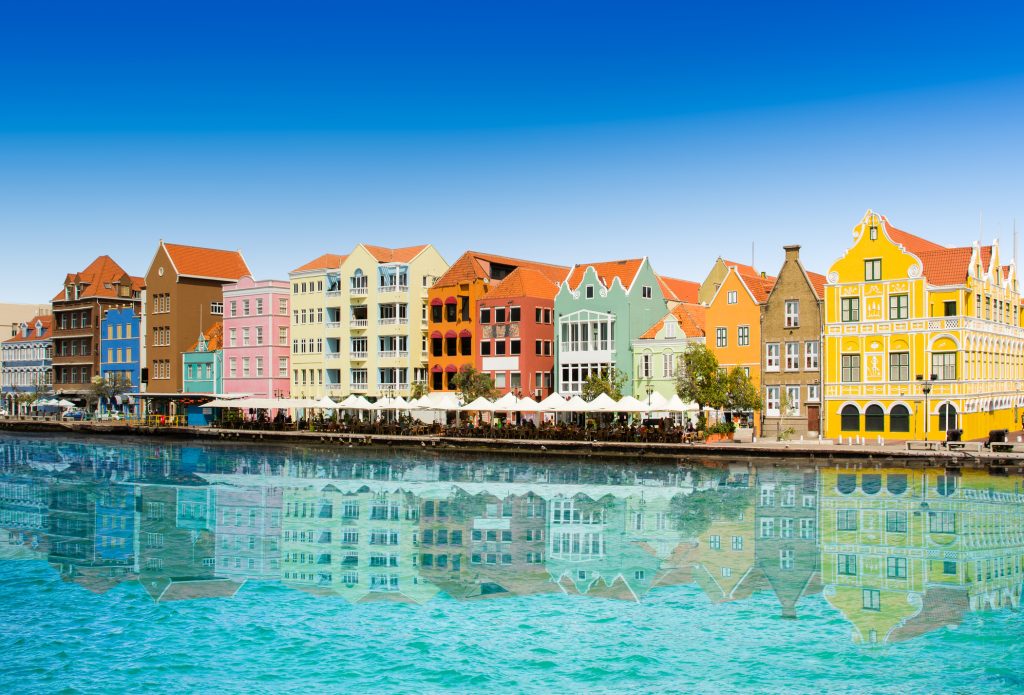
The CANSO year ends in beautiful Curaçao in on 1 – 3 December with the CANSO Latin America and Caribbean Conference 2026.
Following on from the success of 2025’s conference in Panama City, Panama, and kindly hosted by DC-ANSP, this year’s conference will doubtless be as successful in bringing together the region’s aviation community again. Our conference will be held at the: Renaissance Wind Creek Curaçao Resort. The best room rates are available until 19 October and delegates are advised to book their accommodation as soon as possible.
An introduction to our Conference
The CANSO Latin America and Caribbean Conference 2026 is the premier annual event for CEOs, Directors General, and senior leaders influencing the future of air navigation services in the region. As our region encounters increasing operational pressures, traffic fluctuations, Global Navigation Satellite System (GNSS) vulnerabilities, workforce shortages, and the pressing need for digital transformation, the conference serves as a platform for leaders to collaboratively address these shared challenges and agree on implementation through coordinated regional initiatives.
At the event, CEOs from across the region will work on transforming data from just operational metrics into a strategic governance instrument. They will interpret trends and anomalies, prioritise investments, support budget requests, and communicate performance convincingly. The CEO Workshop aims to demonstrate that even simple, limited datasets, when used effectively, can improve executive decision-making, aid resource advocacy, and boost an institution’s credibility with Boards, regulators, and States.


Across three days, the conference will addres the region’s most urgent priorities:
- Airspace optimisation and measurable performance, celebrated through the CANSO LAC Award of Excellence.
- Infrastructure modernisation and CNS/ATM upgrades, essential for transitioning to a digitised, efficient environment.
- Cross‑border operations and contingency planning, where leaders will define the Minimum Implementation Path (MIP) for immediate interoperability.
- Strategic risk management, including GNSS interference, where ANSPs must strengthen detection, continuity procedures, and safety culture.
- Cybersecurity governance, now inseparable from safety and requiring resilient architectures and decision‑making frameworks.
This conference is the regional mechanism for alignment, collaboration, and executive initiatives. Each session aims to produce clear, actionable results such as CEO decision guidelines, regional dashboards, interoperability strategies, and governance structures that promote safer, more efficient, and better-connected skies.
CEO and senior leader involvement is crucial. The future of air navigation in Latin America and the Caribbean depends on visionary leaders who can see the big picture, make swift decisions, and harness data wisely to build resilient systems that support continued growth.
The 2026 CANSO Latin America and Caribbean Conference is an exciting gathering where leaders come together to inspire one another and work hand-in-hand on initiatives that will shape the future of aviation in our vibrant region over the next decade.
Together, we are forging resilient and integrated skies—powered by data, strengthened by leadership, and united as a region.


Our outline programme
Tuesday 1 December (all timings subject to confirmation)
| 09:00 – 16:30 | Early registration |
| 09:00 – 16:30 | Conference Exhibition |
| 09:30 – 13:00 | CEO Training – Data‑Driven Performance: Using Regional Data to Strengthen High‑Performance ANSPs in Latin America and the Caribbean Important information This workshop is primarily aimed at senior leaders of CANSO Full Members. Associate Members are invited to send one representative of their company as an observer and can do this by contacting Events@CANSO.org. Introduction As the Latin America and Caribbean region faces traffic volatility, GNSS vulnerabilities, workforce constraints, and increasing pressure to improve cost‑efficiency, CEOs must lead with clarity, agility, and evidence. This workshop reframes data as a strategic governance resource for the region to anticipate risks, prioritise investment, and communicate performance to Boards, regulators, and States. The session emphasises regional realities, shared challenges, and collaborative solutions, with a special focus on ANSPs at a regional level, whose operational environments often require adaptable, cost‑effective approaches. CEOs will explore how regional data exchange scaled to the capacities of all ANSPs can support smarter decision‑making. The workshop will highlight the value of both individual and collective regional data sharing, demonstrating how datasets can help your own or neighbouring ANSPs understand trends, compare operational pressures, and identify practical solutions that fit local contexts. CEOs will discuss how to establish simple, achievable reporting practices that do not burden ANSPs while still delivering meaningful insights for local or regional planning. Workshop Focus Areas Why Data Matters at the CEO Level Shift data from operational output to a strategic governance tool. Avoid data overload by focusing on a small set of decision‑relevant indicators tailored to LAC realities. Use data to monitor trends, risks, and investment outcomes. Identify indicators that matter most for regional ANSPs, such as staffing levels, service continuity, cost drivers, and traffic variability. Turning Data Into Decisions – Leadership & Executive Action Equip CEOs to interpret trends and anomalies, prioritise investments, support budget requests, and communicate performance credibly. Discuss how limited datasets can still support strong decision‑making. Explore how CEOs can use data to advocate for resources and policy support. Executive Discussion What decisions do you make today without the data you wish you had? CEOs will identify critical data gaps, particularly among ANSPs with limited analytical capacity. CEO Decision Lab – Turning Data Into Executive Action CEOs will work through three real‑world regional scenarios using simple indicators, trend analysis, and shared regional experience: Traffic surge. GNSS interference. Staffing shortage. CEOs will make decisions based solely on the indicators on their dashboards, demonstrating how even basic data can support strong leadership. Output: A set of CEO decision rules based on regional realities. Designing a LAC Regional Dashboard CEOs will define: Indicators for your own ANSP. Reporting frequency and a common reporting period. Format, data owner, quality checks, and recipients. Required contextual commentary. Decisions the data should support. The goal is to create a simple dashboard that reflects LAC operating realities and supports single ANSP and regional decision‑making without requiring complex benchmarking systems. Workshop Outputs CEO Performance Dashboard (single, regional, scalable, simple) CEO Decision Rules |
| 13:00 – 14:00 | Networking lunch |
| 14:00 – 16:00 | Workshop – From GreenATM to the MIP: Delivering a Sustainable and Optimised ATM Future How can ANSPs translate sustainability and efficiency ambitions into practical operational improvements? This session will explore the journey from GreenATM Accreditation, which provides ANSPs with a structured framework to assess, benchmark and progressively improve their environmental performance, both in terms of their own organisational footprint and the operational contribution they can make to reducing aviation emissions. The discussion will then look at how technology, digitalisation and automation can unlock further efficiency gains across ATM, and how the ICAO Global Air Navigation Plan (GANP) and the emerging Minimum Implementation Path (MIP) can help ANSPs identify, prioritise and sequence the foundational capabilities and investments needed to support a more efficient, interoperable and sustainable global ATM system. The workshop will explore practical examples of what is already delivering measurable benefits, where technology can make the greatest difference, and how ANSPs can connect environmental ambition with operational modernisation. It will also consider how frameworks such as GreenATM and the MIP can support a more structured pathway from assessment and prioritisation to investment, implementation and measurable outcomes |
| 18:30 – 21:00 | Welcome Reception Hosted by DC-ANSP |
Wednesday 2 December (all timings subject to confirmation)
| 08:00 – 09:00 | Registration |
| 08:00 – 16:15 | Conference Exhibition |
| 09:00 – 09:45 | Welcome and Opening Remarks |
| 09:45 – 10:15 | CANSO Latin America and Caribbean Award of Excellence The CANSO LAC Award of Excellence aims to recognise and celebrate outstanding achievements by Air Navigation Service Providers (ANSPs) in the Latin America and Caribbean region who have demonstrably improved the efficiency, capacity, and performance of their airspace through innovative, measurable, and sustainable optimisation initiatives. The 2026 CANSO Latin America and Caribbean Award of Excellence recognises excellence in airspace optimisation. The main factors considered in selecting the award recipient include, and are not limited to: Operational Impact and Measurable Results Innovation and Technical Excellence Regional Collaboration and Integration Safety and Compliance Sustainability and Long‑Term Value Leadership, Change Management, and Organisational Commitment |
| 10:15 – 10:45 | Networking Break |
| 10:45 – 11:30 | Keynote Presentation: The use of Data in Other Industries |
| 11:30 – 12:00 | Addressing Key Air Navigation Challenges in Latin America and the Caribbean The airspace over Latin America and the Caribbean is under unprecedented strain due to rapid increases in traffic, complex geography, personnel shortages, and an urgent need for technological upgrades. Our speakers will address the region’s most critical operational bottlenecks and will analyse strategies to improve operational efficiency, optimise airspace capacity, and accelerate the adoption of next-generation technologies to provide for safer, more sustainable, and highly connected skies. The speakers will engage with the audience in detailed discussions about infrastructure modernisation, focusing on how best to upgrade communication, navigation, and surveillance (CNS/ATM) systems, in order to transition to a digitised environment, as well as optimising airspace to reduce delays through better routing and cross-border regional cooperation. By the end of this session, attendees will be able to: Identify specific technological and operational barriers to air navigation performance growth in the LAC region. Identify global best practices that can be successfully adapted to local geographic and economic contexts. Collaborate on designing a roadmap that will effectively align public policy with private-sector innovation. |
| 12:00 – 13:30 | Networking Lunch |
| 13:30 – 14:30 | Regional Integration: Contingency Planning and Cross‑Border Operations Achieving seamless regional integration and proper alignment of both technology and procedures will play an important role in implementing what will amount to the Minimum Implementation Path (MIP) for the Latin America and the Caribbean regions. This will require unprecedented collaboration to overcome geopolitical boundaries and operational silos. This session features four leading aviation figures and regional experts who will tackle key issues of contingency planning and cross-border operations. The panel aims to engage in a fruitful discussion and share best practices on operational resilience to major disruptions, and to promote a unified strategy for safety and efficiency within shared airspace. This panel will examine cross-border harmonisation, emphasising the alignment of air traffic management (ATM) procedures across flight information regions (FIRs) to reduce friction. Speakers will discuss resilient contingency planning and explore methods to create collaborative, rapid-response frameworks that ensure regional connectivity during severe weather, system outages, or geopolitical crises. Crucially, the discussion will outline what the region believes can be a Minimum Implementation Path (MIP) by defining essential baseline technologies and regulatory steps that ANSPs and states need, to achieve immediate interoperability. Panelists will also address barriers to data-sharing which would enable real-time tactical data exchange between neighbouring air navigation service providers (ANSPs). By the end of this session, attendees will be able to: Identify the legal, technical, and operational prerequisites needed to execute seamless cross-border operations. Formulate actionable contingency strategies that prioritise regional continuity over isolated national responses. Map out a proposed “Minimum Implementation Path” that would fast-track regional integration despite varying levels of national infrastructure development. Understand how operational collaboration platforms, such as COMPASS, can support real-time coordination, contingency management, and implementation of the MIP. |
| 14:30 – 15:00 | Strategic Risk: GNSS Interference and Operational Continuity The widespread use of satellite-based navigation has transformed modern aviation but also created significant vulnerabilities in global airspace. This session will analyse the increasing threat of Strategic Risk: GNSS Interference & Operational Continuity. It will cover the growing occurrence of spoofing and jamming incidents and discuss strategies for stakeholders to safeguard air navigation systems and ensure safe operations in challenging situations. The session will examine threat detection by analysing how intentional GNSS jamming and advanced spoofing tactics impact air traffic control differently. It will also present strategies for maintaining operational continuity, illustrating how Air Navigation Service Providers (ANSPs) can ensure smooth traffic flow during prolonged signal disruptions. Additionally, the discussion will highlight safety culture and training, stressing the importance of enhanced preparedness among pilots and controllers to identify and respond to critical navigation problems. By the end of this session, attendees will be able to: Quantify the strategic risks that GNSS vulnerabilities pose to regional airspace safety and economic efficiency. Formulate comprehensive contingency plans that guarantee operational continuity during interference events. |
| 15:00 – 15:30 | Networking Break |
| 15:30 – 16:15 | From Challenge to Action: What CEOs Must Do Now The Latin America and Caribbean region is at a pivotal point, facing record traffic growth, challenging airspace, and rising operational hurdles. The final session, “From Challenge to Action: What CEOs Must Do Now,” gathers aviation leaders to consolidate insights from earlier talks into a clear, strategic plan. This panel will shift focus from pinpointing regional vulnerabilities to executing urgent, tangible solutions to secure the future of a harmonised regional airspace. The session will integrate the most pressing strategic priorities dissected throughout the event. CEOs will outline how to fast-track regional integration and achieve cross-border interoperability despite differing national infrastructure levels, discuss pressing strategic risks, establish executive frameworks to counter growing GNSS interference, and ensure strict operational continuity. Furthermore, leaders will tackle the business imperatives of Infrastructure Modernisation and Harmonisation, focusing on dismantling political and regulatory fragmentation to eliminate costly delays and achieve measurable environmental sustainability targets. By the end of this session, attendees will be able to: Formulate an actionable executive agenda to accelerate the transition of the region to a digital environment beginning within their respective organisations. Mitigate high-level strategic threats, specifically GNSS vulnerabilities, through robust corporate risk management and joint industry contingency planning. Champion cross-border harmonisation to create seamless, resilient regional skies. |
| 18:15 – 23:00 Buses will leave the conference hotel at 18:15 onwards, and return by 23:00. | Conference Dinner – Hosted by DC-ANSP |
Thursday 3 December (all timings subject to confirmation)
| 08:00 – 09:00 | Registration |
| 08:00 – 13:00 | Conference Exhibition |
| 09:00 – 12:00 | Cybersecurity and Safety Culture The convergence of safety and cybersecurity is reshaping how aviation stakeholders manage operational risk. Cybersecurity resilience, defined as the ability of systems to respond to and recover from cyber incidents while maintaining critical function, is essential to ensuring safe and continuous air navigation services. Safety-critical systems often rely on legacy or highly certified platforms that cannot be rapidly patched or changed without impacting operations, creating exposure to evolving cyber threats and increasing dependence on compensating controls and robust recovery capabilities. This session examines how cyber governance can affect resilient architecture and processes to protect safety outcomes. What is “Cybersecurity Governance? Recognise how cyber threats to safety-critical systems can lead to safety hazards. Who should be the decision-making authority? Identify ways to embed cyber resilience principles into safety management systems, policies, and CANSO/ICAO aligned frameworks. |
| 12:00 – 13:00 | Networking lunch |
| 13:00 – 15:00 | LAC3 Meeting (by invitation only) |
| 16:00 – 17:00 | Host Tour – hosted by DC-ANSP Our host tour this year is a walking tour and, as such, you are advised to wear sneakers or other comfortable footwear. Water and snacks will be provided during the tour. Should you wish to join us please register by Friday 13 November and make every effort to attend. Should your plans change please notify Events@CANSO.org. Space on the tour is limited and will be allocated on a first come first served basis. |
Accommodation and visa information
The CANSO Latin America and Caribbean Conference 2026 will be held at the:
Renaissance Wind Creek Curacao Resort
Baden Powellweg 1
Willemstad
Curacao
See the hotel on a Map here.
The delegate rate is available until 19 October. Please read the full terms and conditions of your booking when making your reservation.
Visa Information
We advise all delegates to refer the to this list of territories entitled to visa exemption to confirm whether or not a visa is required to attend the conference.
If you do require a visa for travel and need a letter of invitation to support your application, please tick yes to the relevant queston on the registration form.
If you need a visa invitation letter from our hosts – DC-ANSP – please email events@canso.org, with your arrival and departure dates, name, job title, organisation and email address.
More information on visa applications can be found here.
Practical Information
About Curaçao
Curaçao is located in the Southern Caribbean and is an autonomous country within the Dutch Kingdom.
The capital of Curaçao, Willemstad, is a UNESCO World Heritage site known for its traditional town centre and pastel coloured architecture on the different houses it harbours. Willemstad is also a gateway to nearby beaches which boast extensive and beautiful coral reefs. Curaçao is home to over 161,000 people with variations in languages and cultures, and Willemstad is bursting with heritage and history.
Conference Venue and Hotel
The CANSO Latin America and Caribbean Conference 2026 will be held at the:
Renaissance Wind Creek Curaçao Resort
Baden Powellweg 1
Willemstad
Curaçao
Visa Information
We advise all delegates to refer the to this list of territories entitled to visa exemption to confirm whether or not a visa is required to attend the conference.
If you do require a visa for travel and need a letter of invitation to support your application, please contact CANSO at events@canso.org.
More information on visa applications can be found here.
Embarkation-Disembarkation Card
The Embarkation-Disembarkation (ED) Card, known as the Digital Immigration Card (DI Card), must be completed by every non-resident visitor to Curaçao before going through immigration. For more information, or to complete your form, click here.
Transport from Curaçao International Airport
Curaçao International Airport is located approximately 10 KM from the Renaissance Wind Creek Curaçao Resort, which can easily be reached by taxi. Taxis are available at the ranks outside the arrivals terminal. Fares between the airport and conference venue are around USD 35 depending on traffic, time of day, amount of luggage and number of passengers.
Delegates are advised to download and use one of these apps to arrange their transportation in advance. This is the simplest and most convenient way of organising your transfer.
Kumbai | Curaçao Taxi, Tours & Nightlife in One App
24-7 Taxi Curaçao – Download 24-7 Taxi Curaçao App and book your taxi online
Should you still wish to just get a taxi at the airport on arrival, it is important to note that not all taxis outside the airport accept card payment and some will only accept cash. Therefore, delegates are advised to confirm the correct payment method with their taxi driver before they start their journey, and move to the next car in the line should they need to.
Social Events
Our hosts, DC-ANSP, have generously organised the following social events
Welcome Reception
Tuesday 1 December, 18:30-21:00. Renaissance Curaçao Resort, Riffort Wall.
Dress code: Business casual (jackets not nessesary, and shorts and flipflops are not advised)
Conference Dinner
Wednesday 2 December
Buses depart hotel at 18:15, and return at 23:00.
Dress code is tropical cocktail, and linen shorts and flipflops are acceptable.
Host tour
Thursday 3 December, 16:00-17:00.
Delegates are advised to wear suitable footwear for a walking tour. Water and snacks will be given during the tour.
Registering for our host tour
The deadline to register for the host tour is Friday 13 November. Any registrations received after that time will be placed on a waiting list.
Please note that DC-ANSP will plan this tour, and our other social events, based on your individual registration and the events you select to attend. If your plans change and you can no longer make the conference or any of the social events, please inform us as soon as possible, or at least one week before the event by emailing events@canso.org. If we don’t hear from you we will expect to see you there and arrangements will be made for your participation.
Getting around Curaçao/Willemstad
The most efficient way to explore Curaçao/Willemstad is by car. Please ask the reception at your accommodation provider to arrange a taxi for you if required.
Curaçao/Willemstad also operates a bus network, most routes run buses every one-to-two hours. There are car rentals based at Curaçao International Airport where you can rent a vehicle, and this can also be done online.
Time Zone
The time zone in Curaçao is UTC – 4 hours.
Climate
The climate in Willemstad is warm with an average maximum temperature of 32°C and an average minimum temperature of 25°C. The CANSO Latin America and Caribbean Conference 2026 will take place during the rainy season. Delegates are advised to prepare for warm weather and rain.
Language
The official languages of Curaçao are Dutch and Papiamento. However, English and Spanish are also widely understood and spoken in the country. The CANSO Latin America and Caribbean Conference 2026 will be conducted in English with Spanish interpretation available.
Currency
The Caribbean Guilder (XCG) is the official currency of Curaçao. Banknotes start from 10 XCG up to 100 XCG. 1 USD is approximately 1.79 XCG and 1 EUR is approximately 1.98 XCG. For the most recent currency rates, we recommend using a currency converter.
US dollars and international credit cards are widely accepted in Curaçao.
Credit and Debit Cards
Most international credit cards including VISA and MasterCard are widely accepted in Curaçao/Willemstad and can be used in ATMs, shops and restaurants. ATMs are available throughout the island including at the Curaçao International Airport and at the Renaissance Curaçao Resort.
Tipping
If a service charge is not indicated on the bill, it is advised to tip 10-15 per cent of your overall bill. Some restaurants do include service of 10-15 per cent of the total bill. It is customary to tip taxi driver 10 per cent of the total fare.
Wi-Fi Access
All delegates will have full access to Wi-Fi during the CANSO Latin America and Caribbean Conference 2026. Wi-Fi information will be provided during the event.
Electronics
You may require an adapter in order to plug your appliances into the power sockets. Curaçao uses a two-pin type A plug point. Willemstad operates on a 110-130V supply voltage at 50Hz.
Water
Tap water is safe to drink in Curaçao.
Emergency Contacts
911 for the police and the fire brigade
911 for emergency medical attention and the ambulance
The international country dialling code for Curaçao is 5999.
A range of sponsorship opportunities are available at our conference. To find out more contact Sales@CANSO.org.
Registration
Registration for the CANSO Latin America and Caribbean Conference 2026 is for CANSO Member organisations only. It is free of charge for all CANSO Latin America and Caribbean Region Members (see list below). For all other Membership types, the the following charges (excluding any relevant taxes) apply:
Colleagues who work for other Full Members can attend for a fee of EUR 650
Colleagues who work for CANSO Associate Gold members can attend for a fee of EUR 650
Colleagues who work for CANSO Academia and Research Members can attend for a fee of EUR 650
Colleagues who work for CANSO Associate Silver members can attend for a fee of EUR 830
To check your Member status please see your company’s entry on our Member Directory.
Please provide your correct information, including your work email address. Any incorrect information may lead to your attendance being cancelled.
Colleagues who work for the following Full Latin America and Caribbean Member organisations can attend for free:
- COCESNA
- DC-ANSP
- DECEA
- EANA S.E.
- ECNA S.A.
- ENAIRE
- FAA ATO
- IDAC
- JCAA
- lnstituto Nacional de Aeronautica Civil (INAC)
- NAV Portugal
- SENEAM
- Trinidad and Tobago Civil Aviation Authority
CANSO Members are warmly invited to register for our conference, as soon as possible, using the form below.
Event Details
Host

Sapphire Sponsor

Sapphire Sponsor

Sapphire Sponsor

Lanyard Sponsor

Networking Lunch Sponsor

Networking Break Sponsor

Contact us
For all CANSO events information please contact:
CANSO Events
Tel: +31 (0)23 568 5390
Email: events@canso.org