Managing summer traffic – ENAIRE
To learn about how CANSO Europe members are managing the busy summer travel season, Johnny Pring, CANSO’s Manager Europe Policy and Advocacy, has conducted short interviews with some senior managers of air navigation services providers (ANSPs). In the latest interview of this series, he speaks with Xavier Benavent Navarro, COO of Spanish ANSP ENAIRE.
How does the air traffic situation in Spain this summer compare to last summer?
Spain is handling a busier summer than 2024. EUROCONTROL projected at least five per cent traffic for summer 2025 versus summer 2024 across the European network, with Spain among the growth hotspots.
The fact is, according to ENAIRE’s own data, air traffic in July 2025 rose by an average of 5.3 per cent, with some units experiencing daily surges of up to 20 per cent and even 35 per cent on peak days. This exceptional growth has set new records across Spanish area control centres (ACCs) and airports, with demand far surpassing the European average. These figures underscore a strong recovery and unprecedented demand in Spain’s air traffic network, which is now 14 per cent higher than in 2019, the pre-pandemic year.
Is ENAIRE applying airspace optimisation measures and changes to sector configuration to enable more capacity and/or increase flexibility to respond to traffic fluctuations?
Yes. ENAIRE is adjusting sector configurations and opening additional sectors as needed, in line with the Network Manager’s seasonal planning and the commitments set out in the Network Operations Plan (NOP) Rolling Seasonal Plan.

Despite these significant efforts, the sharp increase in demand still exceeds available capacity, making certain Air Traffic Flow and Capacity Management (ATFCM) measures, including delays, unavoidable.
Has ENAIRE implemented any new ATM system functionalities or technology innovations that will help accommodate more traffic? If so, do you expect that they will already bring benefits this summer, or only in coming years?
ENAIRE is currently deploying an advanced Conflict Detection Tool based on Tactical Trajectory Management (TTM) at the Barcelona and Madrid ACCs, expected to deliver an average 10 per cent increase in sector capacities by 2026. This will help reduce the need for certain regulations and, in turn, lower delay figures.
The Seville and Canary Islands ACCs will follow with implementation during 2026 and 2027.
In parallel, other projects aimed at enabling dynamic sector limits and enhancing operational flexibility are progressing well and will be introduced once the benefits of the TTM are fully consolidated.
Additionally, ENAIRE is further enhancing the application of advanced ATFCM measures, optimising occupancy and complexity management, and refining the configuration of tactical dynamic routes.
What measures has ENAIRE taken to ensure you have enough staff available to deal with the summer traffic?
The following measures are being implemented in 2025:
- Increased controller availability: Staffing levels have been reinforced with 143 more ATCOs than in 2019 and 54 more than in 2024. In addition, ENAIRE is finalising the recruitment of 158 new air traffic controllers (ATCOs) to sustain capacity through 2026–27.
- Enhanced peak-period coverage: As presented at the EUROCONTROL NM User Forum, ENAIRE has introduced productivity and attendance policies, agreed with the unions, aimed at reducing last-minute absences and aligning resources more closely with demand.
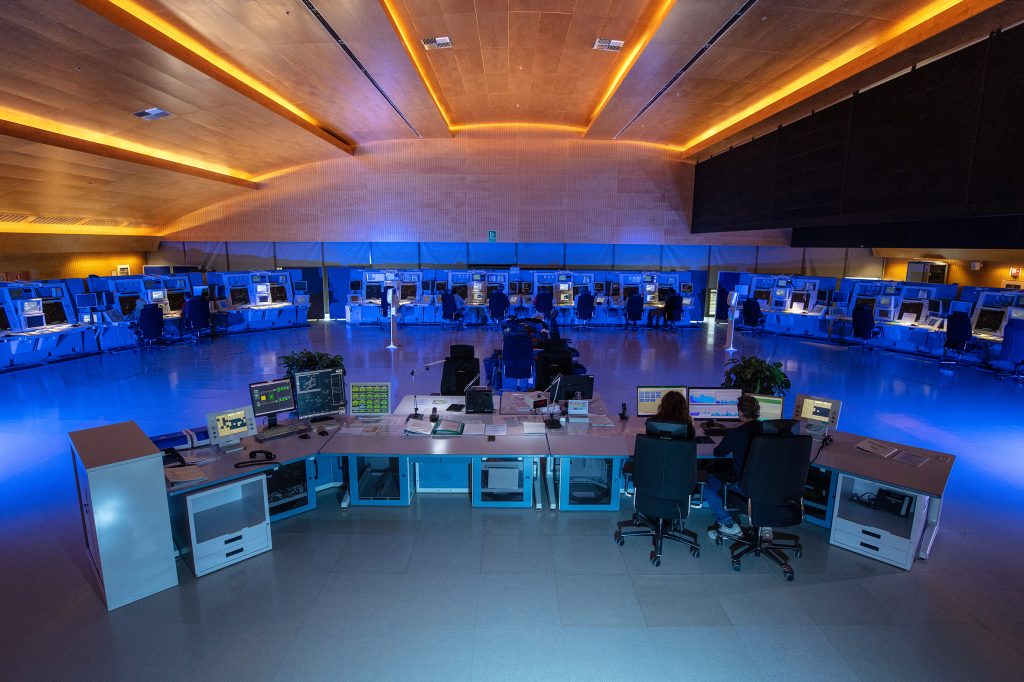
How has ENAIRE worked with the NM, airlines and airports to prepare for the summer?
Ahead of the summer season, ENAIRE took part in all NM Working Arrangements to agree and coordinate summer measures, with the goal of maximising efficiency through a network-oriented approach.
In addition, ENAIRE plays an active role in the NOP Rolling Seasonal Plan, working closely with the NM and other stakeholders to coordinate capacities, sector openings, and ATFCM measures.
In August 2024, ENAIRE had to manage traffic during severe storms in the Balearic Islands. How have you prepared for potential adverse weather disruptions this summer?
New weather specialists have been deployed in Palma and Madrid ACCs, working directly alongside ATCOs and supervisors in the operations room, complementing the existing teams in Barcelona and Seville ACCs.
Measures include tighter integration of meteorological information into daily NOP processes and strengthened coordination with the Network Manager on adverse-weather scenarios.
Building on operational experience from the 2024 Balearic storms, ENAIRE continues to safeguard safety through targeted ATFCM measures and has incorporated the lessons learned into the current seasonal plans.
Is ENAIRE undertaking any other measures to deal with summer traffic?
ENAIRE’s 2025 Capacity Plan comprises 91 measures targeting the key areas of the ATM system: increased staff availability, refined operational procedures, advanced ATFCM measures, modern and more efficient technologies and tools, and airspace and route redesigns to accommodate growing demand.
How will ENAIRE continue to ensure a high level of safety during busy summer periods?
ENAIRE ensures a high level of safety by applying robust safety performance management, supported by standardised procedures and advanced operational tools.
These measures help keep controller workload at manageable levels, maintain situational awareness, and ensure that operational staff have timely, accurate information to support sound decision-making, even during peak traffic periods.
What long-term solutions do you believe are needed for ENAIRE to be able to provide more capacity in future summer travel periods?
Regarding regulatory and economic framework, continue reforming the EU Performance and Charging Scheme to ensure timely staffing and technology investments that align with traffic growth.
With the Single European Sky ATM Research project (SESAR) Deployment Manager, continue developing the Enhanced Free Route Airspace (FRA) by end-2025 and beyond, and advance the deployment of SESAR solutions, including service-oriented digital architectures and advanced arrival flow tools, to reduce tactical workload and increase airspace throughput.
Also modernise controller workplaces and automation by finalising nationwide deployment of the iFOCUCS control position and evolving the SACTA-iTEC air traffic control system functions. This will enable more flexible cross-sector operations, enhanced decision support, and data-rich coordination with other stakeholders.
Continue evolving Digital Information Services by prioritising the implementation of Flight and flow information for a collaborative environment (FF-ICE) and digital information services (D-ATIS/D-VOLMET, which reiterate analogue information to enhance transmission and interpretation reliability, and system-wide information management (SWIM)-aligned exchanges) to ensure airlines and ANSPs have access to shared, high-quality data for both pre-tactical and tactical operations.