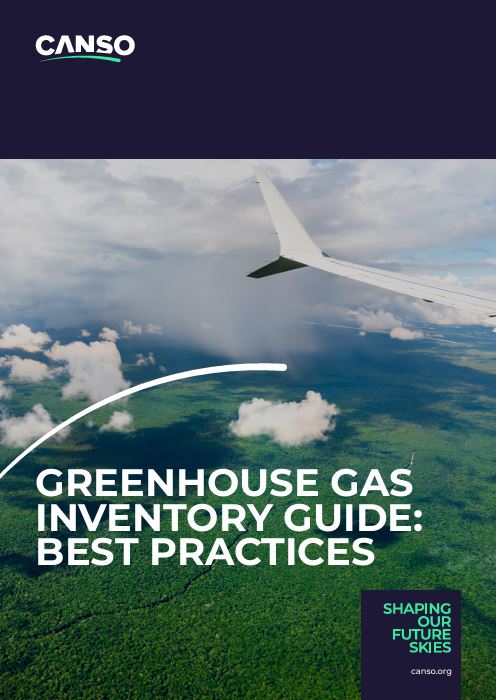
A tailored guide to Greenhouse Gas (GHG) inventories for Air Navigation Service Providers (ANSPs)
CANSO Environment Workgroup Chairs Alexandre Diogo, Head of Sustainability, Skyguide, and Natalie Merchant, Sustainable Aeronautics Analyst, NAV CANADA examine the benefits of a new way of tackling aviation emissions.


As aviation works towards a more sustainable future, ANSPs can play a crucial role in supporting the industry’s transition to net zero. A foundational step to contribute to this goal is to start measuring the ANSP’s emissions as a GHG inventory. GHG inventories provide a systematic accounting of an organisation’s emissions and serve as the foundation for effective climate action. Without measuring emissions, it is very difficult to reduce them meaningfully.
Emissions are closely linked to energy consumption and resource use. A GHG inventory can help uncover inefficiencies in buildings and operational assets that drive both emissions and costs. By identifying these inefficiencies, ANSPs can prioritise investments that reduce energy use, lower operating expenses, and improve resilience.
In addition to environmental responsibility, regulatory expectations around climate disclosure are expanding, and stakeholders including airlines, governments, employees, and the public, are increasingly demanding transparency. Measuring emissions positions ANSPs to respond credibly to these expectations and reduces the risk of reactive, last-minute reporting.
Globally recognised frameworks such as the GHG Protocol provide detailed methodologies for compiling GHG inventories. Rather than restating these approaches, CANSO’s Greenhouse Gas Inventory Guide: Best Practices builds on them, translating global standards into clear practical guidelines tailored specifically to the ANSPs context.
The guide offers contextual material and best practices that reflect the realities of ANSPs. It clarifies how GHG inventory methodologies apply specifically to ANSP operations, including complex and often challenging areas such as the treatment of aircraft emissions.
Whether an organisation is assessing its emissions for the first time or refining an existing inventory, this guide highlights important considerations for ANSPs, that may be otherwise overlooked when applying generic standards. Both beginners and advanced users will find tailored and useful guidance to improve their practices.
By measuring GHG emissions, ANSPs demonstrate leadership, strengthen operational insight, and position themselves as proactive partners in aviation’s climate transition. Measurement is not the end goal, but it is an essential foundation for credible and effective climate action.
CANSO invites the global aviation community to explore the full publication and leverage its guidance to strengthen environmental performance and accelerate progress toward net-zero ambitions.
Download the Greenhouse Gas Inventory Guide by clicking the image below.