Investing in airspace: Enabling aviation’s future – By Simon Hocquard, President and CEO, CANSO
By Simon Hocquard, President and CEO, CANSO
When we imagine aviation’s future, we picture new aircraft, expanding airports and exciting new technologies. Yet another essential part of the aviation ecosystem deserves much greater attention: the infrastructure and services that allow aircraft to operate safely and efficiently through our skies.
As aviation leaders prepare to meet this week (16-20 November) in Montréal for ICAO’s Seventh Worldwide Air Transport Conference (ATConf/7), the first such conference since 2013, its focus on connectivity, economic development and resilience could not be more timely. I believe this is one of the most important conversations we need to have about aviation’s future. Aviation cannot realise its growth ambitions through investment on the ground alone. We must invest in the skies, too.
Recognising ATM as strategic infrastructure
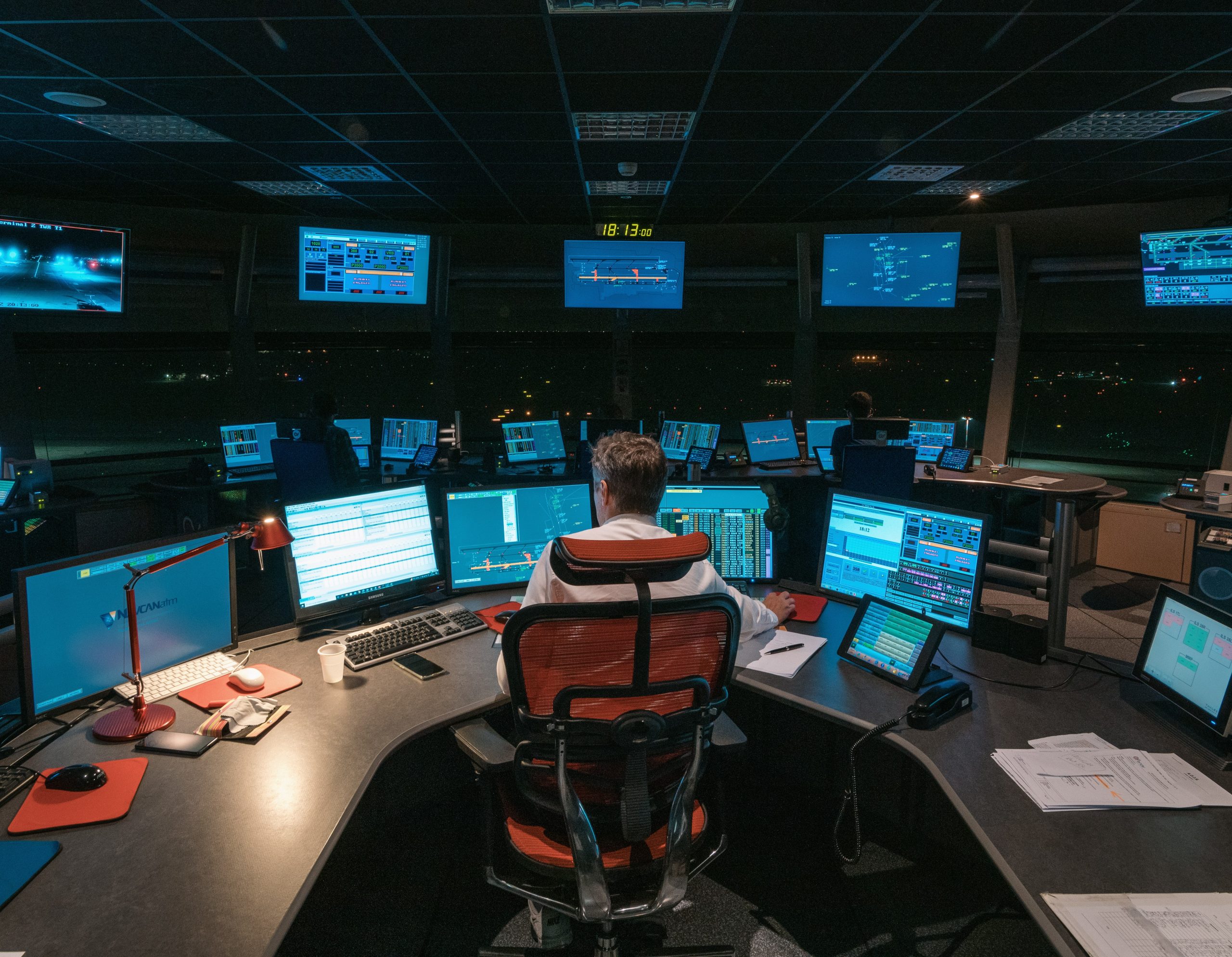
Air traffic management (ATM) is as fundamental to connectivity as airports, ports or energy networks are to the wider economy. Modern ATM creates capacity, strengthens resilience, supports more efficient operations and helps reduce aviation’s environmental impact. It will also be essential to integrating drones, advanced air mobility, higher airspace operations and commercial space activities.
Yet ATM modernisation is not consistently recognised as a strategic national investment priority. The scale of the challenge is significant. The global air navigation services market is estimated at around USD 45 billion annually. The United States has committed an initial USD 12.5 billion to modernise its air traffic control system, while Europe’s ATM Master Plan identifies EUR 11.4 billion in investment needs for 2025–2035. And modernisation increasingly means investing not only in physical infrastructure, but also in digital services, cybersecurity, automation and people.
That is the message of the working paper CANSO is co-presenting at the conference, Enabling Aviation Growth through Coordinated and Economically Sustainable ATM Modernisation (ATConf/7-WP/152), together with Brazil, ACI, ASA World, ICCAIA, IFALPA and IFATCA. It builds on the work of the Complete Air Traffic System (CATS) Global Council, a coalition of more than 80 organisations whose Concept of Operations for Future Skies was recognised by the 42nd ICAO Assembly. States, air navigation service providers, airports, manufacturers, pilots and air traffic controllers are speaking with one voice.
Coordination makes every investment go further
Progress made in isolation can become an expensive missed opportunity. Different priorities, incompatible systems and disconnected timelines create duplication, raise costs and erode the benefits of aviation’s inherently global network. We risk creating islands of progress in an industry that can only thrive through connectivity.
ICAO’s evolution of the Global Air Navigation Plan (GANP), particularly the Minimum Implementation Path (MIP) currently under development, offers a way forward. The MIP aims to establish a common, phased baseline of essential capabilities — including digital foundations such as System Wide Information Management (SWIM) and Flight and Flow Information for a Collaborative Environment (FF-ICE) — to help States, ANSPs and industry plan and invest with greater confidence. Combined with open standards and modular architectures, this common approach could reduce fragmentation, improve affordability and support innovation.
This does not mean imposing identical solutions on every State. It means agreeing on the foundations that must work together, while allowing each region to choose a realistic path to implementation.
Making modernisation economically sustainable
Modernising ATM requires substantial, sustained investment, often in the face of constrained public budgets and uncertain revenues. The pandemic exposed the vulnerability of financing models that depend heavily on traffic volumes, and reminded us that essential ATM services must remain resilient and available even when demand falls.
Yet the benefits of modernisation extend far beyond air navigation service providers. Airlines, airports, passengers, national economies and society as a whole benefit from safer, more efficient and more resilient airspace. Our financing approaches must better reflect this wider economic and societal value, encouraging long-term investment and shared responsibility across the aviation ecosystem.
This matters most for States and regions whose traffic levels or existing funding arrangements cannot support the necessary transformation on their own. Global interoperability cannot become a privilege of those who can afford it. Ensuring that no State or region is left behind must be a central principle of how we finance and deliver the future of aviation.
From shared vision to shared commitment
The aviation community already has a shared vision for Future Skies. Turning it into reality means stronger cooperation between governments, regulators, ANSPs, airports, airlines, industry and international financial institutions. It means aligning infrastructure planning, embracing common standards, developing a skilled, future-ready workforce and strengthening organisations’ ability to manage change while maintaining safe, continuous operations.
ATConf/7 is an opportunity to move this discussion from technical modernisation to strategic economic policy. Our challenge is no longer simply to imagine the future of aviation. It is to make that future achievable, affordable and accessible to all.
The skies of tomorrow will be shaped by the investment decisions and partnerships we make today, and my message at ATConf/7 is simple. We must stop treating investment in ATM as a consequence of aviation growth and start recognising it as an enabler of that growth. If we want aviation to be safer, more connected, resilient and sustainable, we need to invest in the airspace infrastructure that makes it all possible.
About the Author